
Dessa AI voice model rollout triggers unexpected shift in speech tech
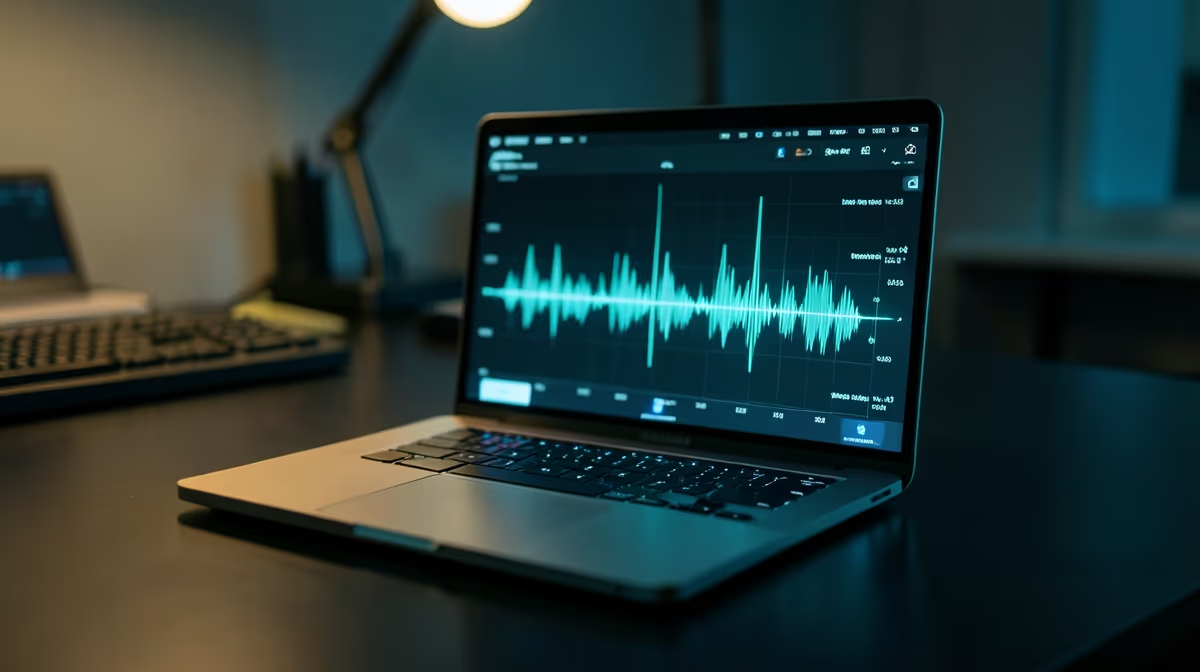
Human conversation thrives on the imperceptible: the brief hesitation before an answer, an unscripted shift in pitch, and the seamless overlap of two voices in dialogue. By discarding the conventional practice of converting written text into sound, Jack Dorsey's financial technology firm Block has introduced the Dessa AI voice model, an architecture trained entirely on authentic spoken human exchanges. The release marks an intentional break from industry norms, prioritizing the raw cadence and acoustic complexities of everyday speech over structured phonetic transcripts.
Designed with full-duplex capabilities and engineered to operate locally on consumer hardware like MacBooks, the system represents an architectural departure that bridges generative audio and decentralized computing. By capturing the authentic inflection, pacing, and emotional nuance of real dialogue, the technology challenges traditional assumptions regarding how machines should learn to talk.
By bypassing written text datasets entirely to train directly on raw human speech, the Dessa AI voice model establishes an architectural shift toward local, real-time conversational computing.
A Departure from Traditional Neural Speech Architecture
For decades, the standard pipeline for machine-generated voice has relied on processing massive amounts of text data before synthesizing it into audible speech. While this conventional text-to-speech methodology produces clean, grammatically precise outputs, it frequently leaves synthetic voices burdened by a robotic or overly formal cadence. The underlying systems struggle to replicate the messy, spontaneous nature of unscripted dialogue because written text inherently lacks the acoustic information embedded within actual vocal chords.
Block's new voice model bypasses this structured text foundation completely. Instead of treating speech as an acoustic downstream rendering of written words, the system was trained directly and entirely on human conversation and natural speech. Early evaluations emphasize that this audio-first training approach allows the model to mirror real-time human interaction with startling fidelity, capturing subtle breathing patterns, interjections, and natural hesitations that text-trained models routinely smooth over.
| Architecture Dimension | Conventional Text-to-Speech Systems | Block's Dessa AI Voice Model |
|---|---|---|
| Primary Training Foundation | Structured written text datasets | Raw, unscripted human conversation and natural speech |
| Execution Architecture | Typically reliant on centralized server infrastructure | Full-duplex model capable of running locally on MacBooks |
| Conversational Dynamics | Half-duplex or turn-based synthesis | Full-duplex real-time interaction |
| Acoustic Nuance | Often sterile, formal, or synthetic | Captures natural pauses, cadence, and human vocal inflection |
By learning straight from spoken dialogue, the model absorbs the rhythmic flow that defines organic communication. This allows the system to sound eerily human to listeners, closing the historical gap between artificial vocal systems and authentic interpersonal discourse.
The Mechanics of Full-Duplex Local Execution
Beyond its training methodology, a central breakthrough of the Block AI speech model lies in its operational footprint. Rather than tethering real-time vocal inference to sprawling, power-hungry cloud data centers, Block configured the system as a full-duplex model capable of running locally on personal devices such as MacBooks.
Running conversational audio models directly on local consumer hardware fundamentally redefines accessibility and efficiency in modern speech synthesis.
Full-duplex technology enables simultaneous two-way audio streams, allowing users and machines to speak, listen, and interrupt one another without the artificial delays that plague standard conversational interfaces. Executing these intensive calculations directly on a personal computer eliminates latency spikes and preserves continuous interaction.
This edge-capable deployment signals an architectural divergence from the centralized paradigms that have dominated recent artificial intelligence deployments:
- It removes perpetual reliance on centralized remote server pipelines for audio processing.
- It leverages the onboard processing power of consumer-grade personal hardware.
- It permits continuous, low-latency conversational exchanges without round-trip data transmission delays.
- It introduces full-duplex interaction where audio input and output occur concurrently in real time.
For developers and software creators working with voice audio, executing a model of this fidelity on local hardware changes the economics and logistics of voice application development.
Economic Realignment and Infrastructure Shifts
The emergence of edge-capable conversational models points to a broader economic pivot across the technology sector. The prevailing generative AI ecosystem relies heavily on centralized server dependencies, saddling providers with massive recurring computational and bandwidth expenses. Every millisecond of synthesized speech transmitted from a remote data center incurs real hosting, networking, and hardware overhead.
By demonstrating that a sophisticated human conversation AI can run locally on standard hardware like a MacBook, Block's initiative signals an alternative pathway. Shifting computational burdens from centralized cloud farms to decentralized consumer hardware reduces infrastructure costs for developers and institutions.
This model demonstrates that high-performance audio synthesis does not necessarily require continuous connectivity to corporate cloud infrastructure. If speech generation can thrive directly on client devices, software developers can create responsive voice-enabled tools without incurring unsustainable cloud compute overhead, accelerating the deployment of edge-based audio software.
Regulatory Scrutiny, Biometric Data, and Deepfake Governance
As synthetic voices become indistinguishable from actual human speakers, the technology moves directly into regulatory and ethical crosshairs. The emergence of vocal models that convincingly capture human conversational cadence introduces significant policy challenges regarding identity verification, digital fraud, and biometric authenticity.
The political and regulatory landscape is poised to react as these hyper-realistic voice tools proliferate:
- Regulatory scrutiny will intensify around privacy, synthetic media, and deepfakes as synthetic speech becomes virtually identical to real individuals.
- Legal and ethical questions are mounting regarding the ownership, rights, and sourcing of human speech data used to train conversational models.
- Cross-border data scraping and the biometric profiling of human voices will provoke scrutiny as tech hubs compete for hyper-realistic audio dominance.
When audio models sound unmistakably human, the traditional safeguards that rely on voice-based identification or public trust in recorded audio face immediate friction. Policymakers and industry watchdogs are increasingly forced to examine how audio data is harvested, whether individuals consented to their vocal mannerisms being modeled, and how edge-run voice models will be governed once they reside entirely on private hardware.
Linguistic Biases and the Evolution of Human-Computer Interaction
Bypassing written text datasets does not merely change how an AI model sounds; it fundamentally alters what the model learns. Standard large language models derive their worldview from the rigid grammar, curated knowledge, and structural conventions of written literature, articles, and documentation. When an artificial intelligence is trained purely on conversational audio, it internalizes an entirely different cross-section of human communication.
Spoken dialogue carries regional dialects, slang, colloquial shortcuts, emotional hesitation, and cultural nuances that rarely survive the transition into formal written text. While this audio-first strategy allows the model to capture authentic speech patterns that standard systems overlook, it also creates the potential for novel linguistic biases. The model will inherently mirror the specific speech patterns, socioeconomic backgrounds, and colloquial traits of the voices present in its training recordings.
This paradigm shift mirrors a significant historical parallel in computing: the transition from command-line interfaces to graphical user interfaces during the 1980s. Command-line interfaces demanded that users adapt to the rigid, text-based operational logic of the machine. The graphical interface reversed that burden, adapting the computer's display to human visual intuition. Similarly, voice models trained on text forced humans to accommodate the stilted, turn-by-turn mechanical pacing of synthetic assistants. Training systems directly on human conversation attempts the same inversion—compelling computing systems to operate according to the natural, unscripted cadence of human dialogue.
The Testing Phase and Future Trajectory
The rollout of the system has initiated a wave of evaluations across the developer and technical research communities. The immediate timeline centers on independent performance verification and hardware stress testing:
- Over the next 24 hours, tech publications and developers are focusing technical reviews on the model's unscripted conversational realism and its local operational efficiency on MacBooks.
- Across the next 72 hours, broader industry analysis will center on community testing of the model's full-duplex capabilities, comparing its text-free training results against legacy voice pipelines.
- Technical scrutiny will center on how the model handles complex edge cases, continuous voice interrupts, and sustained local hardware resource usage.
In the best-case scenario, this architecture establishes an industry benchmark for natural, human-like voice interaction that smoothly integrates into local hardware workflows without requiring cloud connectivity. Conversely, the worst-case scenario involves unexpected technical constraints or emerging deployment hurdles as independent developers test the boundaries of its local execution and conversational limits. How the system performs under widespread public testing will determine whether text-free training becomes the new foundation for conversational audio engineering.
Frequently Asked Questions
What is Dessa AI, and who launched it?
Dessa is a new full-duplex AI voice model launched by Jack Dorsey's company, Block. Unlike traditional text-to-speech systems, it was built without relying on text inputs.
How was the Dessa AI voice model trained?
Dessa was trained entirely and directly on human conversation and speech rather than standard text data. This unique training approach allows it to capture the natural nuances of human dialogue.
Why does Block's Dessa AI voice model sound so realistic?
Because it was trained directly on human speech patterns rather than synthesized text, the model replicates the rhythm, cadence, and sound of real conversations eerily well. Reviewers note that this training foundation makes its audio output remarkably human-like.
Can Dessa run locally on personal hardware?
Yes, Block designed the full-duplex AI voice model to operate locally on devices like MacBooks. This local execution capability allows for efficient, real-time voice processing.
What does the launch of Dessa mean for the AI and voice tech industry?
The introduction of a voice model trained purely on speech rather than text shifts the paradigm for conversational AI development. It highlights a growing industry focus on creating more fluid, human-centric audio interactions.
What is next for Block and its audio AI initiatives?
Following the release of Dessa for local MacBook operation, Block is expected to explore further applications for its conversational AI technology. Developers and tech enthusiasts are watching closely to see how this speech-first approach integrates into broader software ecosystems.
Conclusion
Block's release of the Dessa AI voice model represents a concrete milestone in generative speech technology, moving away from synthesized text pipelines in favor of direct training on human dialogue. Confirmed as a full-duplex system capable of executing locally on MacBooks, the model shifts both the operational footprint and acoustic realism of synthetic speech. As developers, researchers, and industry observers evaluate its text-free training architecture and local processing performance, the coming evaluations will determine how significantly this speech-first methodology reshapes the broader voice technology ecosystem.
Sources
- Block’s new voice model sounds eerily human — TechCrunch
- Jack Dorsey’s Block launches Dessa, an AI voice model trained on human conversation — Indian Television Dot Com
- Jack Dorsey's Block launches Dessa; AI voice model trained entirely on “human conversation” — ANI News
- Block Launches Full-Duplex AI Voice Model Dessa for Local MacBook Operation — KuCoin
- Block's latest AI model Dessa was trained entirely on human speech — and it shows — Mashable
- Dessa AI: Jack Dorsey’s Block Built a Voice Model Without Text — Kingy AI


