
Hitler Eagle Nest Fire Arrest Sparks Tensions Across Germany
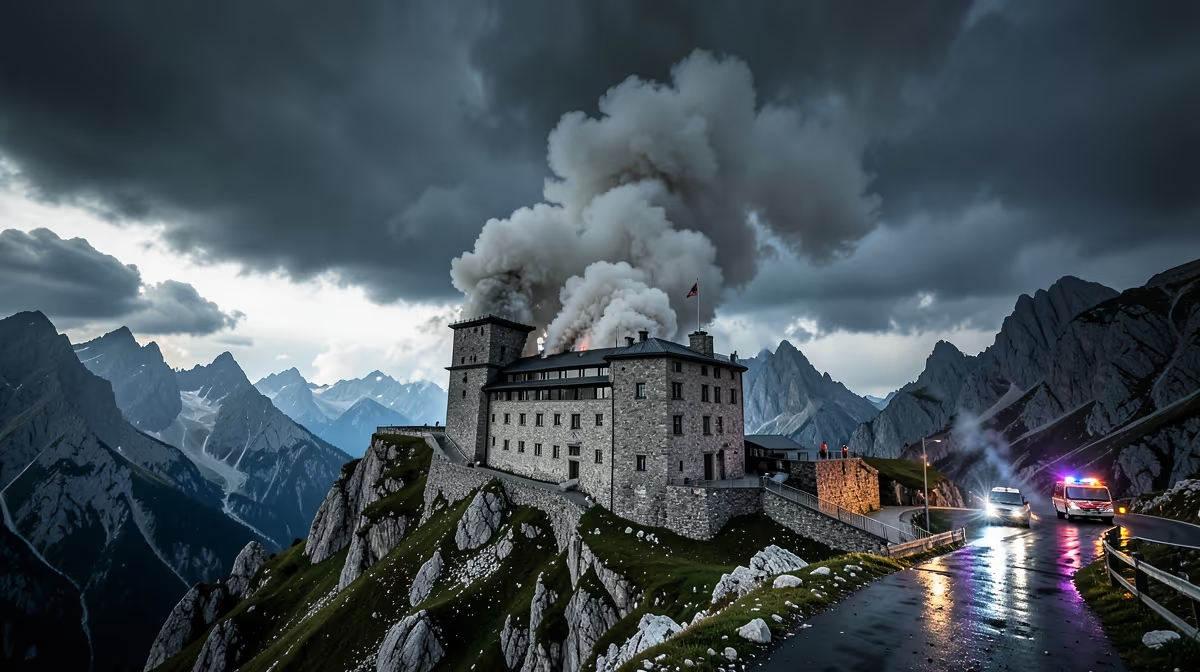
Flames tearing through a mountaintop fortress constructed during the height of the Third Reich immediately reignited profound historical and security tensions across Europe. Emergency crews scrambled up steep Alpine terrain as smoke and fire engulfed parts of the historic structure, turning an isolated mountain peak into an active crime scene. Authorities moved swiftly in response to the suspicious Hitler Eagle Nest retreat fire, detaining a suspect on suspicion of arson while regional teams worked to contain the destruction.
A suspect has been taken into custody on suspicion of arson following a major fire at the Kehlsteinhaus, Adolf Hitler's former mountaintop retreat in the Bavarian Alps.
Emergency Response and the Arson Investigation
The incident began when flames broke out at the mountaintop complex, known officially as the Kehlsteinhaus and popularly referred to as Hitler's Eagle's Nest or teahouse. Emergency response units mobilized to reach the high-altitude site in Germany, encountering heavy smoke and flames that spread across sections of the building, with reports indicating that the inn area was burning. The remote geographic location complicated emergency operations, requiring coordinated logistics to bring personnel and equipment up the mountain to battle the blaze.
German police launched an immediate investigation into the origin of the fire, quickly determining that the incident warranted criminal inquiry. Law enforcement subsequently detained a male suspect on suspicion of arson. While the suspect remains in custody, investigators have maintained an active presence at the scene to secure the area, collect forensic evidence, and assess the structural integrity of the landmark.
Official statements from German police and regional authorities are focused on determining how the blaze was initiated and evaluating the full scope of physical damage sustained by the historical complex.
Historical Context of the Kehlsteinhaus
Perched high in the Bavarian Alps, the Kehlsteinhaus was constructed in the late 1930s as a mountaintop retreat for Adolf Hitler and senior members of the Nazi party leadership. Designed as an architectural showpiece of the regime, the complex served as an extension of the broader governmental presence established in the Berchtesgaden area during World War II.
Following the end of the war, the site underwent a dramatic transition. Rather than remaining an exclusive symbol of totalitarian power, the complex was preserved and repurposed into a historical landmark and popular tourist destination. For decades, it has operated as an educational touchpoint and an inn, drawing international visitors, historians, and researchers seeking to study World War II history in its physical setting.
Incidents at major historical landmarks prompt critical discussions about heritage preservation, public safety, and how historical tourism locations are protected.
Because the site is a prominent tangible artifact of the Nazi era, any physical threat or disruption to the Kehlsteinhaus inevitably carries intense historical resonance, separating it from typical municipal structural fires.
Security Vulnerabilities and Ideological Targets
The fire has exposed the inherent vulnerability of historic monuments associated with dark tourism and controversial ideological heritage. Physical preservation of sites tied to World War II and the Nazi regime requires balancing open public access for educational tourism against the persistent danger of deliberate destruction.
Security analysts emphasize that polarizing historical landmarks face complex threats from opposing ideological factions. Investigators and observers note speculation regarding whether an attack on such a site stems from extremist reverence or aggressive anti-fascist vandalism. These divergent motives highlight the dual threat confronting authorities tasked with safeguarding sensitive European heritage sites:
- Vandalism or arson driven by anti-fascist direct action seeking to obliterate remnants of totalitarian regimes.
- Unlawful actions or targeting tied to extremist groups attempting to exploit historical locations for ideological posturing.
- Opportunistic property crimes targeting remote, high-profile tourist destinations with limited overnight perimeter defenses.
This structural vulnerability poses ongoing challenges for German security agencies and heritage preservationists who manage properties laden with heavy historical baggage.
Political and Diplomatic Dimensions
Domestically, the fire has reignited sensitive debates across Germany regarding the management, protection, and public presentation of sites linked to the Nazi dictatorship. German authorities continually navigate the complex responsibility of using these locations for historical education while preventing them from turning into shrines or targets for radical actors.
The incident has also drawn comparisons to notable events in German history, specifically drawing analytical parallels to the 1933 Reichstag fire. While occurring in a vastly different modern context, structural arson attacks against politically charged German landmarks historically trigger rapid political fallout, heightened security reviews, and intense public scrutiny regarding state vigilance.
On the international stage, the suspected arson captured immediate headlines across global news platforms, including coverage by the BBC, Hindustan Times, The Times of Israel, blue News, The Times of India, and the New York Post. The global reaction underscores the enduring sensitivity surrounding World War II memory. Acts of violence or destruction directed at these physical remnants resonate across international diplomatic and cultural spheres, amplifying questions about how modern democracies manage monuments of dark history.
Economic Consequences for Berchtesgaden
Beyond the political and ideological fallout, the blaze presents direct economic implications for the regional community. The Kehlsteinhaus serves as a central anchor for the heritage tourism economy within the Berchtesgaden district of the Bavarian Alps.
| Dimension | Observed and Anticipated Regional Impact |
|---|---|
| Tourism Operations | Temporary site closure during forensic analysis and structural stabilization |
| Regional Economy | Potential reduction in visitor traffic affecting local hospitality and transport |
| Heritage Management | Heightened capital requirements for site security enhancements and structural repairs |
| Law Enforcement | Sustained deployment of forensic investigators and regional police units |
Local residents, hospitality businesses, and tourism operators depend heavily on the steady flow of global travelers visiting the mountaintop retreat. Extended closures for forensic investigation, combined with the costs of repair and potential structural restoration, threaten to disrupt seasonal travel patterns and local commercial activity throughout the surrounding Alpine valley.
Timeline of Events and Future Outlook
The sequence of confirmed events reflects a rapid transition from an active emergency to a complex criminal inquiry:
- A fire broke out at the Kehlsteinhaus mountaintop complex, engulfing portions of the retreat.
- Emergency services navigated mountain routes to initiate firefighting operations and secure the perimeter.
- German police detained a suspect on suspicion of arson in connection with the blaze.
- Forensic investigators commenced structural assessments and evidence collection at the site.
In the near term, authorities are expected to release additional information regarding the suspect in custody, along with formal updates on the extent of structural damage and the full conclusion of firefighting operations. Over the subsequent days, forensic teams will continue their technical examination of the fire's point of origin. Regional administrators and security officials will likely initiate formal discussions concerning site accessibility, security protocols, and necessary restoration efforts.
Expert predictions point toward increased institutional scrutiny regarding how public access is monitored at sensitive historical landmarks across Germany. In a best-case scenario, physical damage to the Kehlsteinhaus will prove minimal and repairable, allowing legal proceedings against the detained suspect to advance cleanly without secondary unrest. Conversely, the worst-case scenario involves severe, irreversible architectural loss that could ignite volatile public controversy and mandate heavy security restrictions across all World War II heritage sites in the country.
Frequently Asked Questions
What happened at Hitler's Eagle's Nest retreat?
A fire broke out at the Kehlsteinhaus, commonly known as Hitler's famous mountaintop Eagle's Nest retreat in Germany. The blaze engulfed parts of the historic structure, prompting a swift response from emergency services.
Was anyone arrested in connection with the fire?
Yes, German police detained a suspect shortly after the incident occurred. The individual was taken into custody on suspicion of arson related to the blaze at the mountaintop site.
Why does the Eagle's Nest retreat matter?
The Kehlsteinhaus is historically significant as a prominent mountaintop retreat associated with Adolf Hitler and the Nazi regime. Because of its dark historical ties, any major incident or threat to the site draws significant international attention and security concern.
Who is affected by the fire at the Kehlsteinhaus?
The incident directly impacts the historical landmark itself and the local Bavarian region in Germany, which manages the site for visitors and tourism. It also draws concern from heritage preservationists and the global public interested in World War II history.
What is the background of the Eagle's Nest retreat?
The Eagle's Nest, or Kehlsteinhaus, is perched high in the Bavarian Alps and was originally built as a retreat for Hitler and the Nazi party leadership. Today, it stands as a heavily visited tourist landmark and a tangible reminder of the WWII era.
What happens next following the arrest?
Authorities are continuing their investigation into the cause of the fire and the motives behind the suspected arson. The detained suspect will face further legal proceedings as German police assess the extent of the damage to the historic structure.
Conclusion
The fire at the Kehlsteinhaus marks a critical juncture in the ongoing effort to protect and interpret sensitive historical landmarks in Germany. With a suspect detained on suspicion of arson, law enforcement authorities and regional officials remain focused on determining the full extent of structural damage, establishing the motive behind the blaze, and navigating the legal proceedings ahead. The incident underscores the perpetual vulnerability of dark tourism destinations, leaving regional administrators with the immediate challenge of repairing a damaged landmark while fortifying security measures across sites tied to the nation's complex historical past.
Sources
- Arrest made after fire at Hitler's famed Eagle's Nest retreat — BBC
- Arrest Following Fire at Kehlsteinhaus – Inn Still Burning — blue News
- Fire breaks out at Kehlsteinhaus, Hitler's former mountaintop retreat in Germany | World News — Hindustan Times
- Fire engulfs Hitler’s teahouse ‘Eagle’s Nest’ in Germany; man arrested on arson suspicion — The Times of India
- German police detain suspect after fire at Hitler’s Eagle’s Nest retreat — The Times of Israel
- Hitler’s infamous Nazi ‘Eagle’s Nest’ retreat set ablaze in suspected arson — New York Post


